
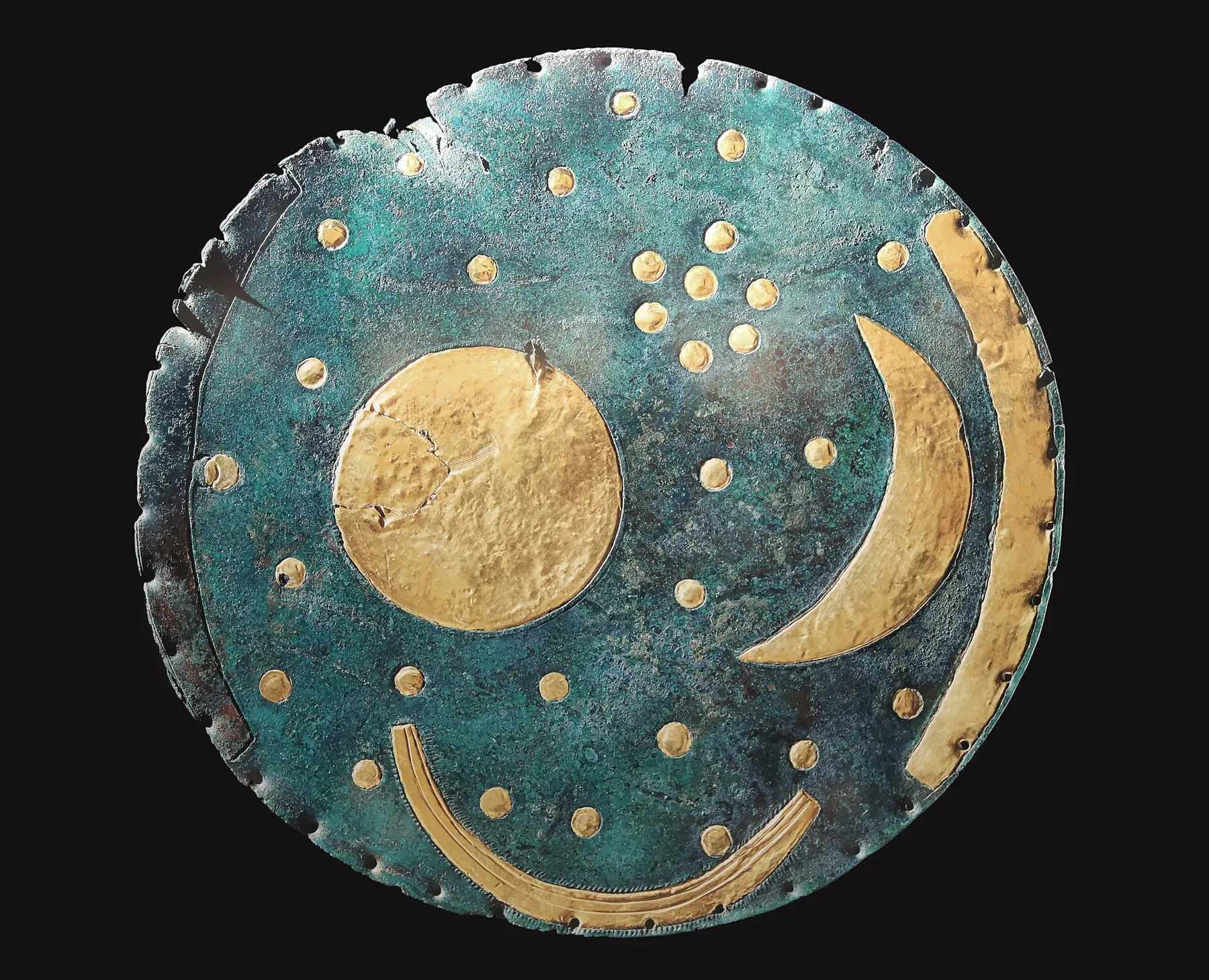
The Nebra Sky Disc
The oldest known concrete depiction of the night sky.
The Nebra sky disc is a bronze disc about 30 cm across, inlaid with gold symbols: a sun or full moon, a crescent, and stars, including a tight cluster widely interpreted as the Pleiades. It was found buried on the Mittelberg hill in Germany in 1999 by illegal metal detectorists and recovered in a police sting operation.
Loading the full dossier…
Connected dossiers
 StonehengeSame era · Bronze Age European sky-watching.
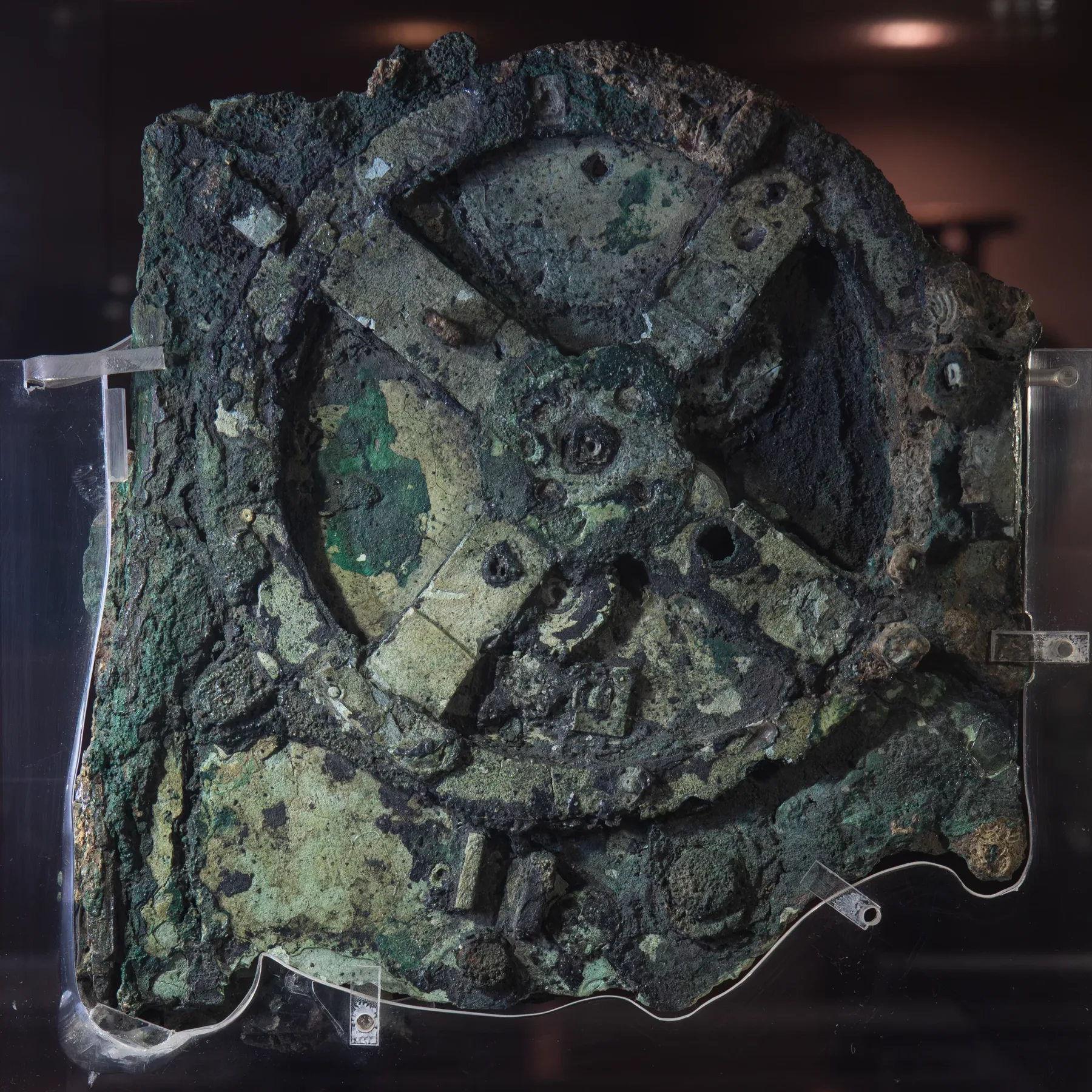 The Antikythera MechanismSame open question · Ancient attempts to model the sky.
See The Nebra Sky Disc in the discovery universe →
Ask the archive
Have a question about this dossier, or think a claim needs a better source? Send it to the editors.
How to read the labels
Hero image: The Nebra sky disc, State Museum of Prehistory, Halle. Photo: Frank Vincentz · Public domain · via Wikimedia Commons. Evidence labels describe the written claims, not the image. Version 1 · updated 2026-10-22.