
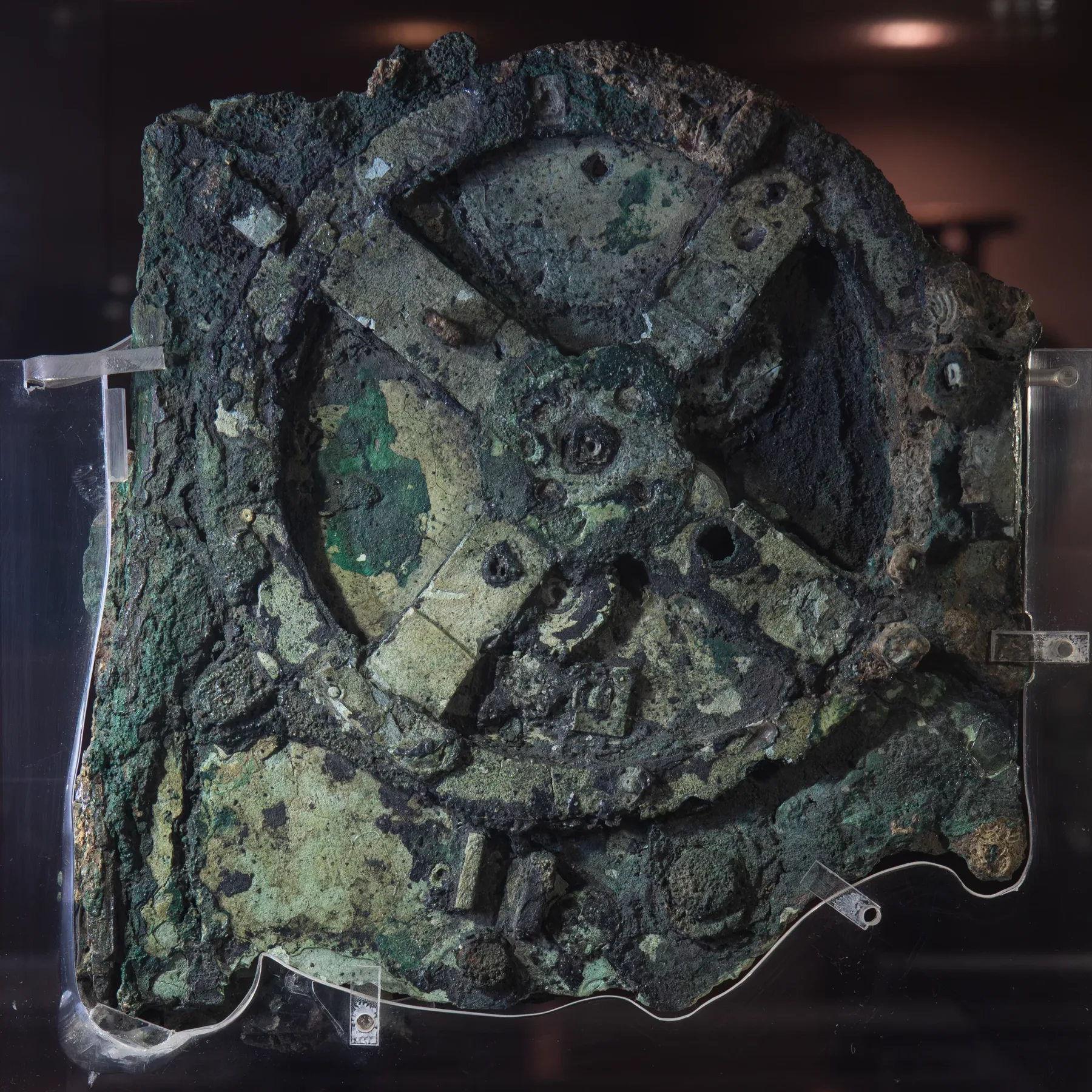
The Antikythera Mechanism
A shoebox-sized bronze calculator that predicted eclipses two thousand years ago.
In 1901, sponge divers working a Roman-era wreck off the island of Antikythera brought up corroded lumps of bronze. Decades later, X-ray imaging revealed what they contained: dozens of precisely cut gear wheels and thousands of tiny inscribed characters. The device modeled the cycles of the Sun and Moon, predicted eclipses and even tracked the timing of the pan-Hellenic games.
Nothing with comparable gearing survives again until the astronomical clocks of medieval Europe. That gap is the real mystery: not whether the Greeks could build it — they demonstrably did — but how much of this mechanical tradition has been lost.
Why it matters
It is direct physical evidence that sophisticated mechanical astronomy existed in the Hellenistic world, forcing a rethink of how ancient science and engineering were connected.
What the evidence says
- Established
Fragments of the mechanism were recovered from the Antikythera shipwreck starting in 1901 and are held at the National Archaeological Museum in Athens.
Basis: Physical artifact in a public collection; recovery history is well documented.
- Established
Imaging of the fragments shows gear trains that modeled lunar motion and predicted eclipses.
Basis: Based on X-ray computed tomography and surface imaging published in Nature (2006).
Sources: 3 - Established
Inscriptions on a back dial track a four-year cycle of athletic games, including the Olympic Games.
Basis: Read directly from inscriptions on surviving fragments (Nature, 2008).
Sources: 4 - Contested
The date of construction is debated, with proposals ranging from about 205 BCE to around 87 BCE; the wreck itself is dated to roughly 70–60 BCE.
Basis: Different methods (eclipse-predictor epoch, letterforms, calendar analysis) give different answers.
Counterpoint: An early epoch derived from the eclipse dial does not necessarily mark the date of manufacture.
- Contested
The calendar ring most likely had about 354–355 holes, suggesting a lunar calendar rather than a 365-day solar one.
Basis: Statistical hole-count analyses of the surviving arc (2024 preprint, building on earlier estimates).
Counterpoint: The ring survives only in part; counts are inferred.
Sources: 8 - Established
No surviving machine of comparable gearing complexity is known until 14th-century European astronomical clocks.
Basis: Consensus in history-of-technology literature.
Sources: 9
Competing interpretations
Planetary display
Reconstructions propose pointers for the five known planets on the front dial.
Single masterpiece vs. lost tradition
Its sophistication suggests earlier prototypes and a workshop tradition whose other products have not survived.
Weigh the evidence
Having read the claims and sources, which explanation do you find most convincing?
One vote per browser. Results appear after you vote.
Open questions
- Who designed and built it, and was it one of many such devices?
- Did it originally include gearing for the five known planets?
- Exactly when was it made?
Connected dossiers
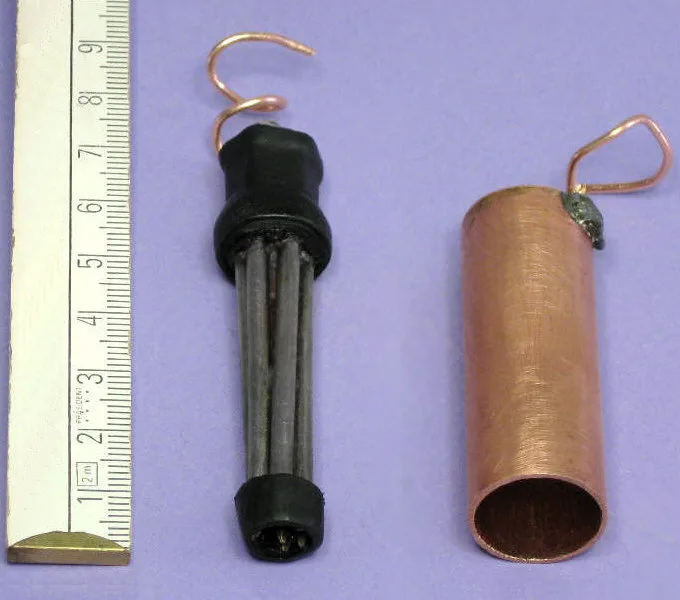 The Baghdad Battery HypothesisContrast · Both are ancient objects linked to modern technology; here the evidence is strong, there it is weak.
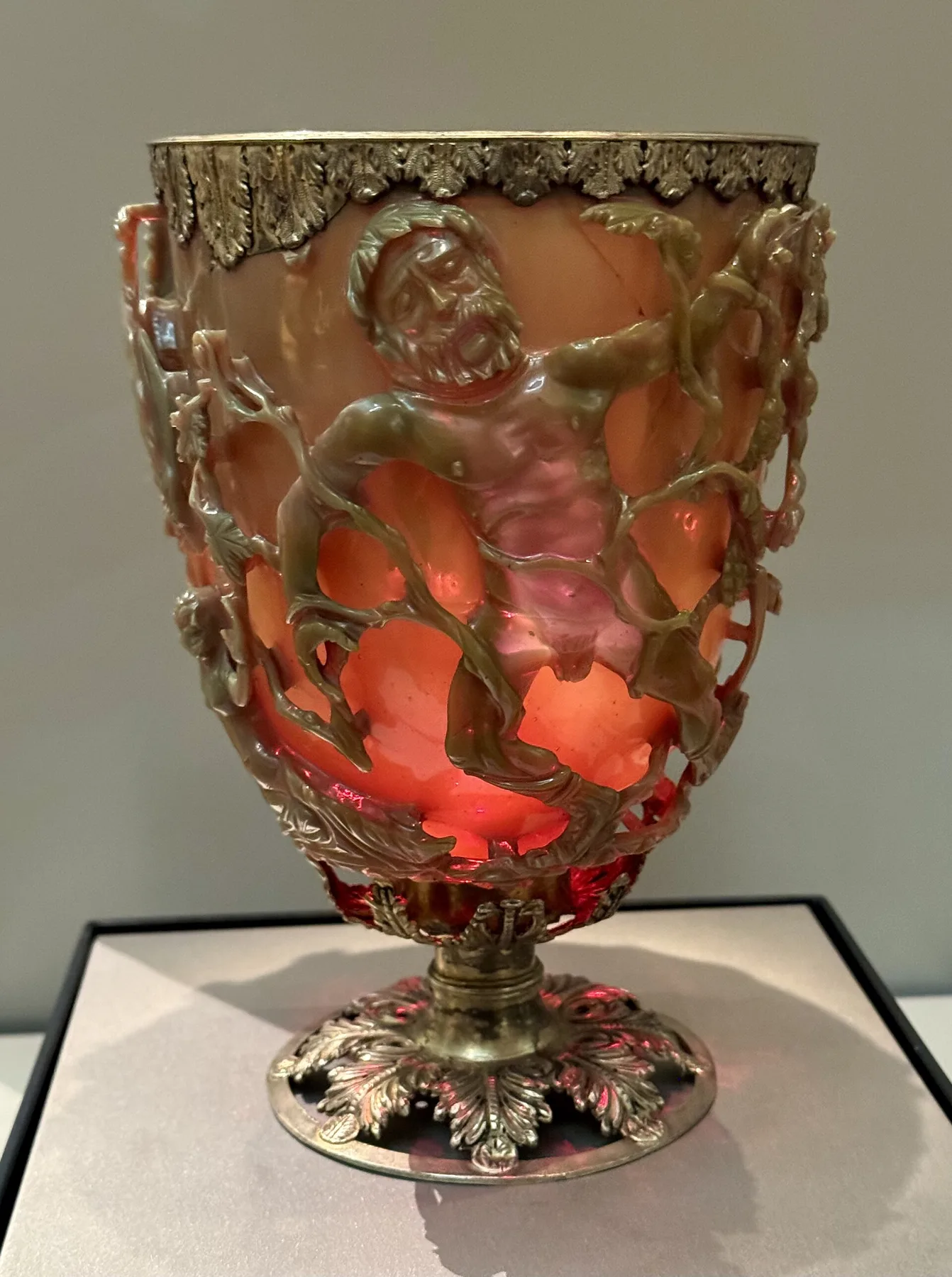 The Lycurgus CupComparable case · Ancient craft whose technical sophistication was only understood with modern instruments.
See The Antikythera Mechanism in the discovery universe →
Ask the archive
Have a question about this dossier, or think a claim needs a better source? Send it to the editors.
Sources
- “The Antikythera Mechanism at the National Archaeological Museum.” Antikythera Mechanism Research Project (2017) Open source ↗REFERENCE WORK · CHECKED 2026-10-22 · HTTP 200 LINK CHECK
- Efstathiou, Basiakoulis, Efstathiou et al.. “The Reconstruction of the Antikythera Mechanism.” International Journal of Heritage in the Digital Era (2013) DOI 10.1260/2047-4970.2.3.307PEER-REVIEWED · CHECKED 2026-10-22 · CROSSREF DOI METADATA
- Freeth, Bitsakis, Moussas et al.. “Decoding the ancient Greek astronomical calculator known as the Antikythera Mechanism.” Nature (2006) DOI 10.1038/nature05357PEER-REVIEWED · CHECKED 2026-10-22 · CROSSREF DOI METADATA
- Freeth, Jones, Steele et al.. “Calendars with Olympiad display and eclipse prediction on the Antikythera Mechanism.” Nature (2008) DOI 10.1038/nature07130PEER-REVIEWED · CHECKED 2026-10-22 · CROSSREF DOI METADATA
- Carman, Evans. “On the epoch of the Antikythera mechanism and its eclipse predictor.” Archive for History of Exact Sciences (2014) DOI 10.1007/s00407-014-0145-5PEER-REVIEWED · CHECKED 2026-10-22 · CROSSREF DOI METADATA
- de Solla Price. “Gears from the Greeks. The Antikythera Mechanism: A Calendar Computer from ca. 80 B. C..” Transactions of the American Philosophical Society (1974) DOI 10.2307/1006146PEER-REVIEWED · CHECKED 2026-10-22 · CROSSREF DOI METADATA
- Paul A. Iversen. “The Calendar on the Antikythera Mechanism and the Corinthian Family
of Calendars.” Hesperia: The Journal of the American School of Classical Studies at Athens (2017) DOI 10.2972/hesperia.86.1.0129PEER-REVIEWED · CHECKED 2026-10-22 · CROSSREF DOI METADATA
- Woan, Graham; Bayley, Joseph. “An improved calendar ring hole-count for the Antikythera mechanism.” arXiv preprint 2403.00040 (2024) Open source ↗INSTITUTION · CHECKED 2026-10-22 · HTTP 200 LINK CHECK
- Marchant. “In search of lost time.” Nature (2006) DOI 10.1038/444534aPEER-REVIEWED · CHECKED 2026-10-22 · CROSSREF DOI METADATA
- Freeth, Tony; Jones, Alexander. “The Cosmos in the Antikythera Mechanism.” ISAW Papers 4, NYU (2012) Open source ↗PEER-REVIEWED · CHECKED 2026-10-22 · HTTP 200 LINK CHECK
How to read the labels
Hero image: Fragment A of the Antikythera mechanism, National Archaeological Museum, Athens. Photo: Logg Tandy · CC BY 4.0 · via Wikimedia Commons. Evidence labels describe the written claims, not the image. Version 1 · updated 2026-10-22.