
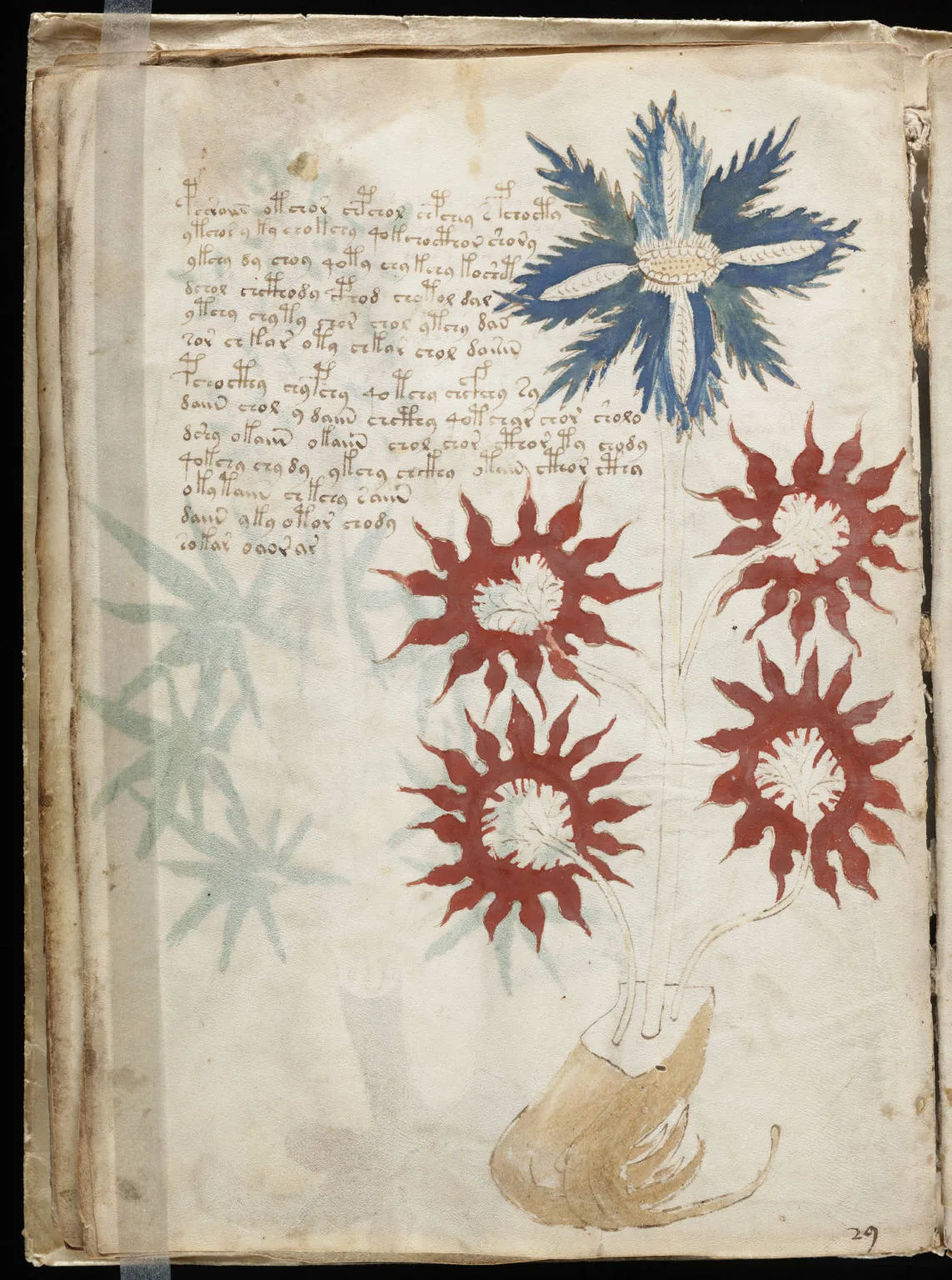
The Voynich Manuscript
A 600-year-old illustrated book written in a script no one has ever read.
Beinecke MS 408 is a small illustrated codex filled with an unknown script, drawings of unidentifiable plants, astronomical diagrams and bathing figures. Radiocarbon dating places its calfskin parchment in the early fifteenth century, and materials analysis found inks and pigments consistent with that period.
The text behaves statistically somewhat like a natural language — word frequencies and entropy resemble Latin or English — yet a century of cryptographers, including wartime codebreakers, has failed to read it. Every claimed decipherment so far has failed independent scrutiny.
Why it matters
It is a rare object where the physical evidence is solid but the meaning is completely unknown — a clean test of how we evaluate extraordinary claims.
What the evidence says
- Established
The manuscript is held at Yale's Beinecke Rare Book & Manuscript Library as MS 408 and has been fully digitized.
Basis: Institutional catalog record.
- Established
Radiocarbon dating at the University of Arizona placed the parchment between 1404 and 1438.
Basis: Consistent results across multiple samples.
Counterpoint: Dates the parchment, not necessarily the writing — though reuse of old blank vellum is considered unlikely.
Sources: 3 - Established
Materials analysis found inks and pigments consistent with the period.
Basis: Laboratory analysis commissioned by the Beinecke Library (2009).
Sources: 4 - Contested
The text shows statistical patterns similar to natural languages, such as word entropy close to that of English or Latin.
Basis: Quantitative linguistic studies.
Counterpoint: Proponents of the hoax hypothesis argue meaningless text can mimic these properties.
- Contested
Its statistical properties are inconsistent with a simple substitution or polyalphabetic cipher.
Basis: Annual Review of Linguistics survey (2021).
Sources: 6 - Speculative
The manuscript may be an elaborate meaningless text (a hoax) produced in the 15th century.
Basis: Argued from statistical regularities in word structure.
Counterpoint: Disputed by linguistic analyses that find language-like structure.
Sources: 7
Competing interpretations
Encoded natural language
The text represents a real language written in an invented script or simple encoding.
Cipher
The text is an enciphered European language.
Meaningless text
The book is a sophisticated 15th-century hoax with no message.
Weigh the evidence
Having read the claims and sources, which explanation do you find most convincing?
One vote per browser. Results appear after you vote.
Open questions
- Does the text encode a real language, a cipher, or nothing at all?
- Where and by whom was it made?
Connected dossiers
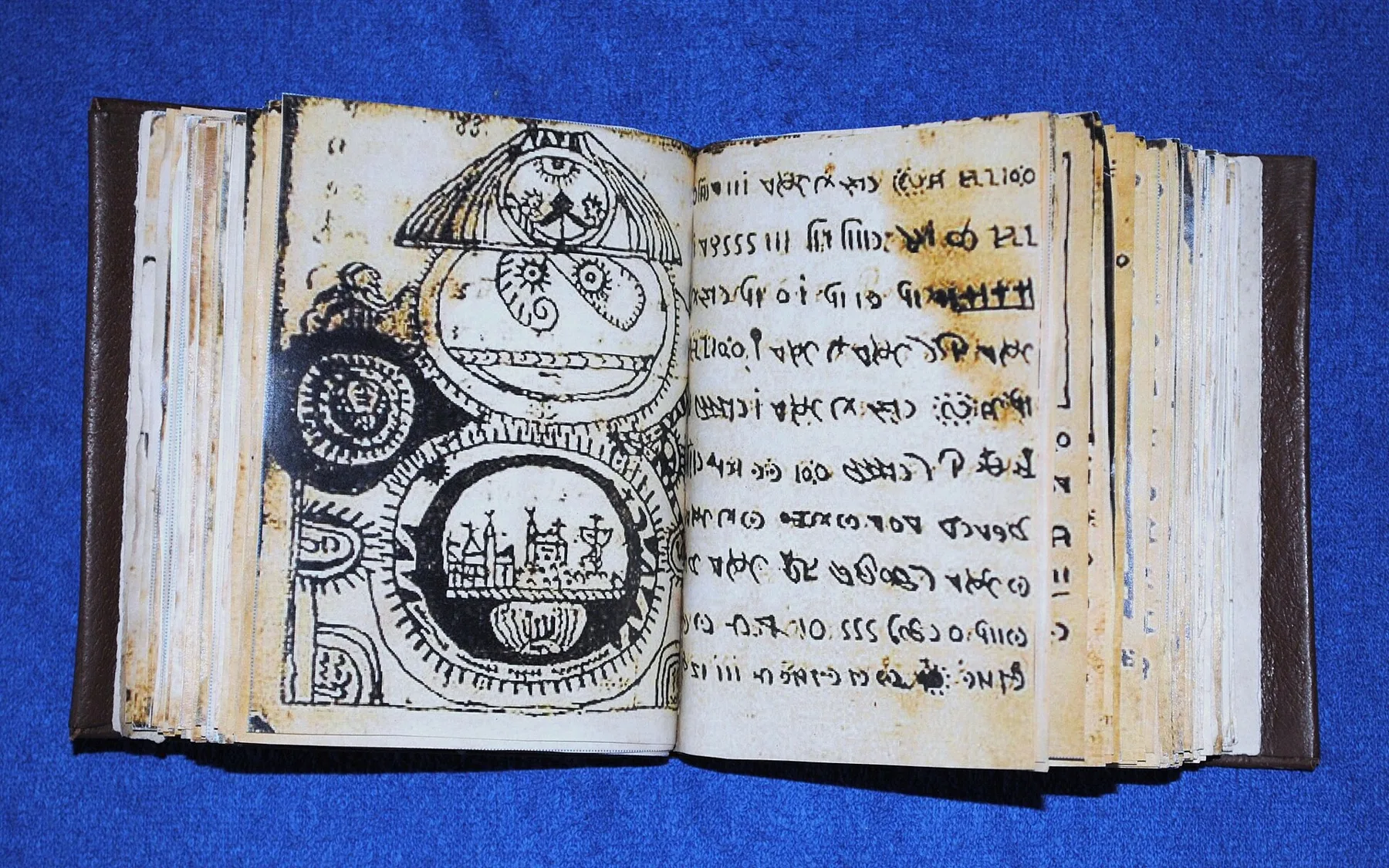 The Rohonc CodexSame open question · Another undeciphered illustrated manuscript.
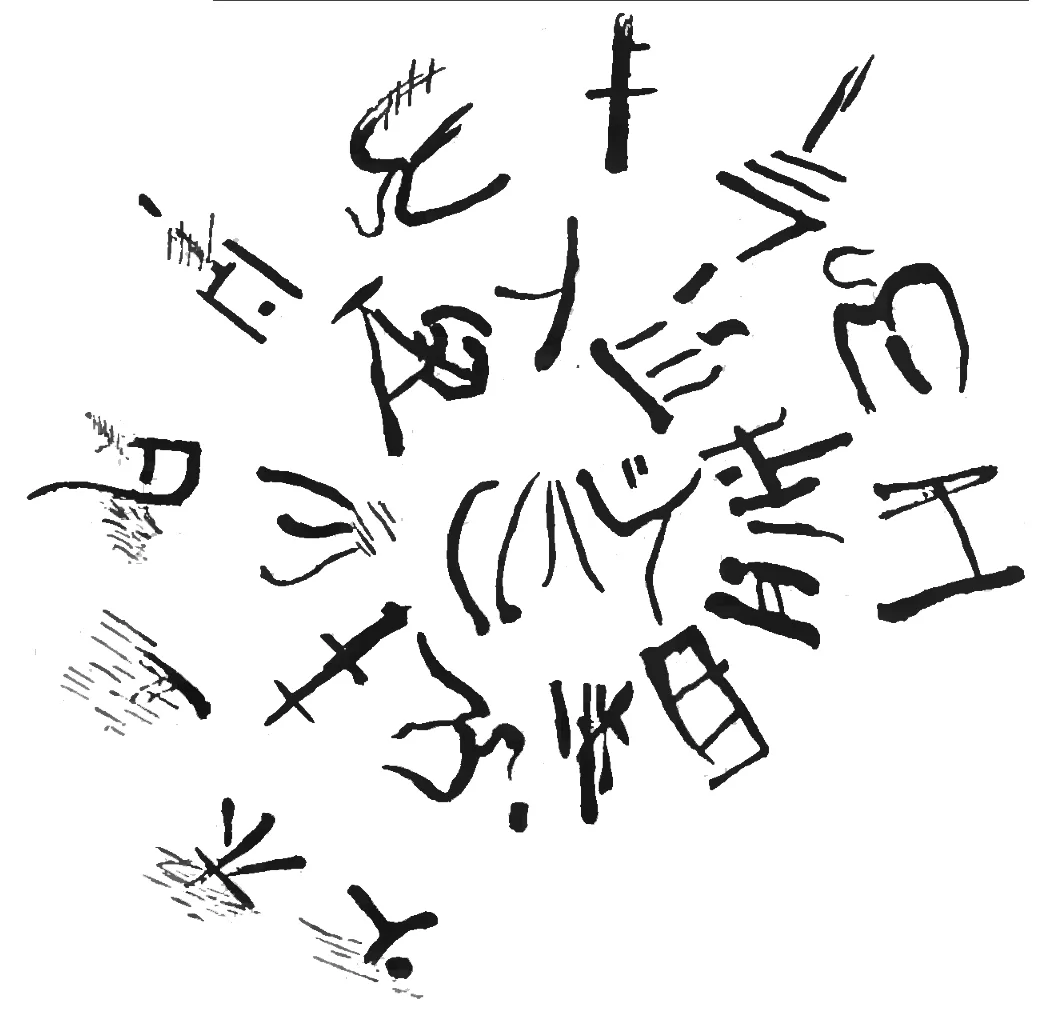 Linear A: The Minoan ScriptSame open question · An undeciphered script, though with far more context.
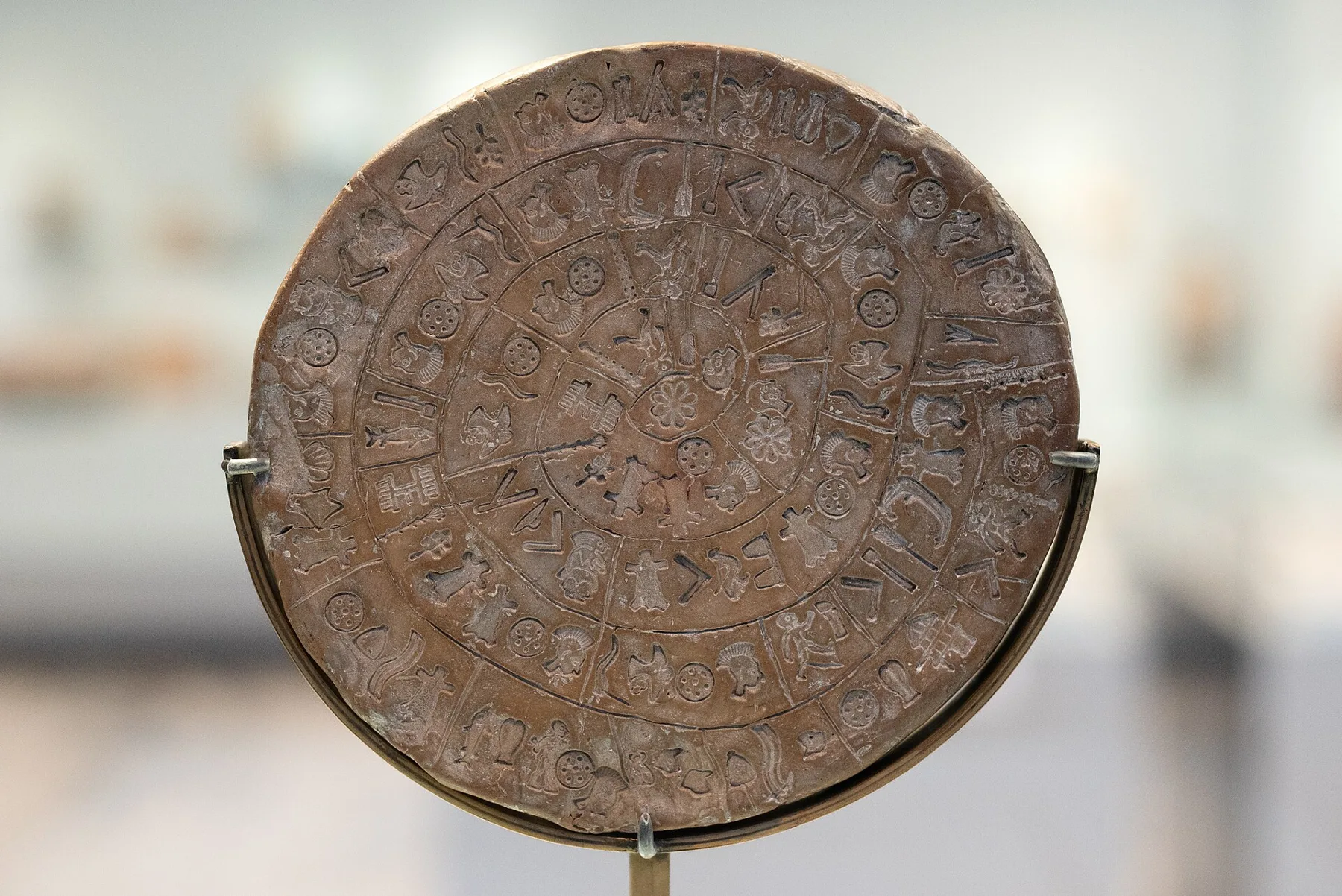 The Phaistos DiscSame open question · Another unique undeciphered text.
See The Voynich Manuscript in the discovery universe →
Ask the archive
Have a question about this dossier, or think a claim needs a better source? Send it to the editors.
Sources
- “Voynich Manuscript.” Yale University Library – Beinecke Rare Book and Manuscript Library (2022) Open source ↗INSTITUTION · CHECKED 2026-10-22 · LIVE; HOST BLOCKS AUTOMATED CHECKS
- Shailor, Barbara A. “Beinecke MS 408.” Beinecke Rare Book and Manuscript Library , General Collection of Rare Books and Manuscripts, Medieval and Renaissance M (2013) Open source ↗INSTITUTION · CHECKED 2026-10-22 · ORIGINAL OFFLINE; WAYBACK MACHINE ARCHIVED COPY
- Daniel Stolte. “UA Experts Determine Age of Book 'Nobody Can Read'.” University of Arizona (2011) Open source ↗INSTITUTION · CHECKED 2026-10-22 · ORIGINAL OFFLINE; WAYBACK MACHINE ARCHIVED COPY
- Barabe, Joseph G. “Materials Analysis of the Voynich Manuscript.” McCrone Associates for the Beinecke Library (2009) Open source ↗INSTITUTION · CHECKED 2026-10-22 · HTTP 200 LINK CHECK
- Landini. “EVIDENCE OF LINGUISTIC STRUCTURE IN THE VOYNICH MANUSCRIPT USING SPECTRAL ANALYSIS.” Cryptologia (2001) DOI 10.1080/0161-110191889932PEER-REVIEWED · CHECKED 2026-10-22 · CROSSREF DOI METADATA
- Bowern, Lindemann. “The Linguistics of the Voynich Manuscript.” Annual Review of Linguistics (2021) DOI 10.1146/annurev-linguistics-011619-030613PEER-REVIEWED · CHECKED 2026-10-22 · CROSSREF DOI METADATA
- Schinner. “The Voynich Manuscript: Evidence of the Hoax Hypothesis.” Cryptologia (2007) DOI 10.1080/01611190601133539PEER-REVIEWED · CHECKED 2026-10-22 · CROSSREF DOI METADATA
- Greshko. “The Naibbe cipher: a substitution cipher that encrypts Latin and Italian as Voynich Manuscript-like ciphertext.” Cryptologia (2025) DOI 10.1080/01611194.2025.2566408PEER-REVIEWED · CHECKED 2026-10-22 · CROSSREF DOI METADATA
How to read the labels
Hero image: A botanical page from the Voynich Manuscript, Beinecke Library, Yale. Image: Unknown author (Beinecke Rare Book & Manuscript Library, Yale) · Public domain · via Wikimedia Commons. Evidence labels describe the written claims, not the image. Version 1 · updated 2026-10-22.