
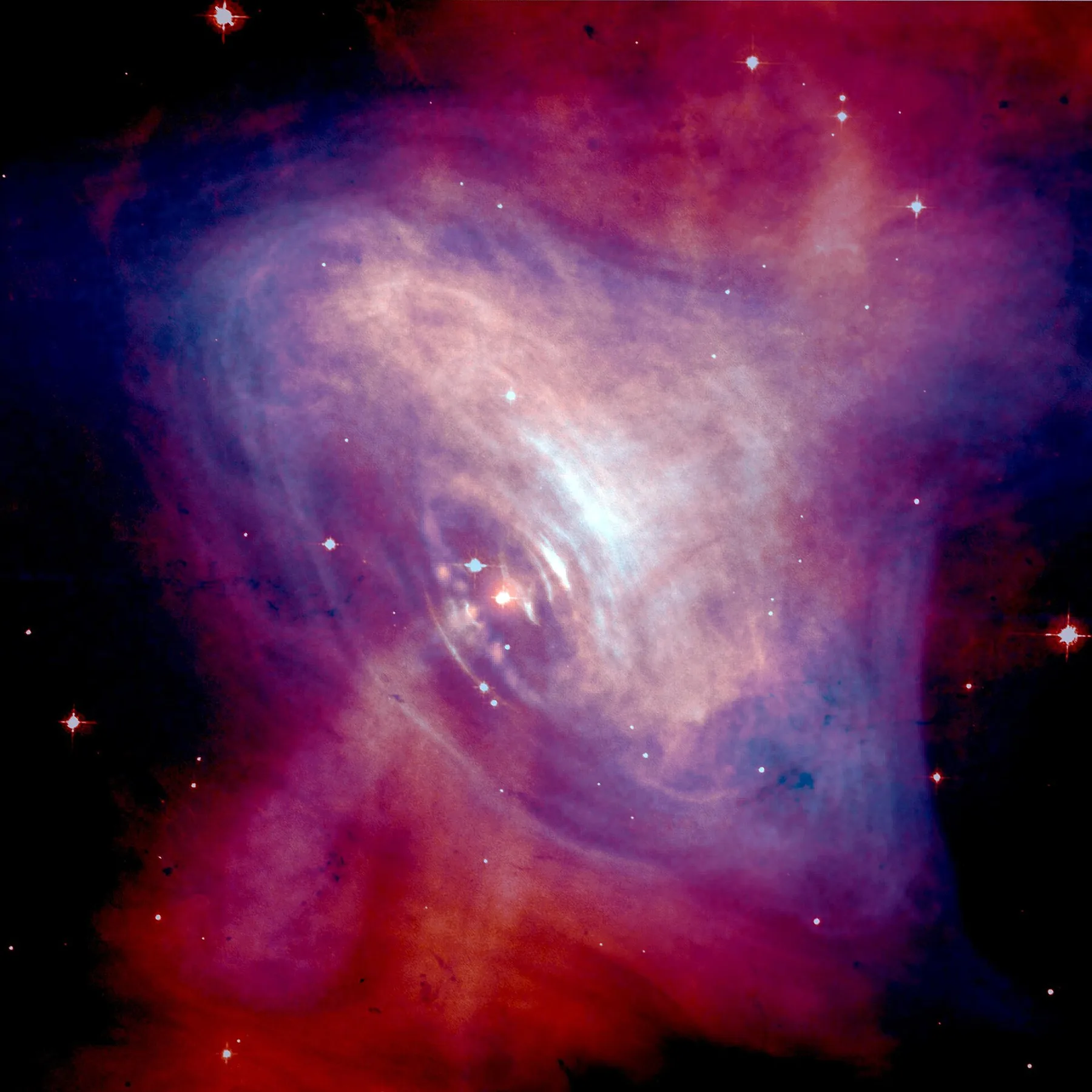
The Discovery of Pulsars
A signal ticking every 1.337 seconds — briefly nicknamed 'Little Green Men.'
In 1967, Jocelyn Bell, a graduate student at Cambridge, noticed a strange signal in her radio-telescope charts. Resolved with a faster recorder, it turned out to be a train of pulses spaced precisely 1.337 seconds apart. The regularity was so striking that the team half-jokingly labeled it LGM-1, for 'Little Green Men.'
Loading the full dossier…
Connected dossiers
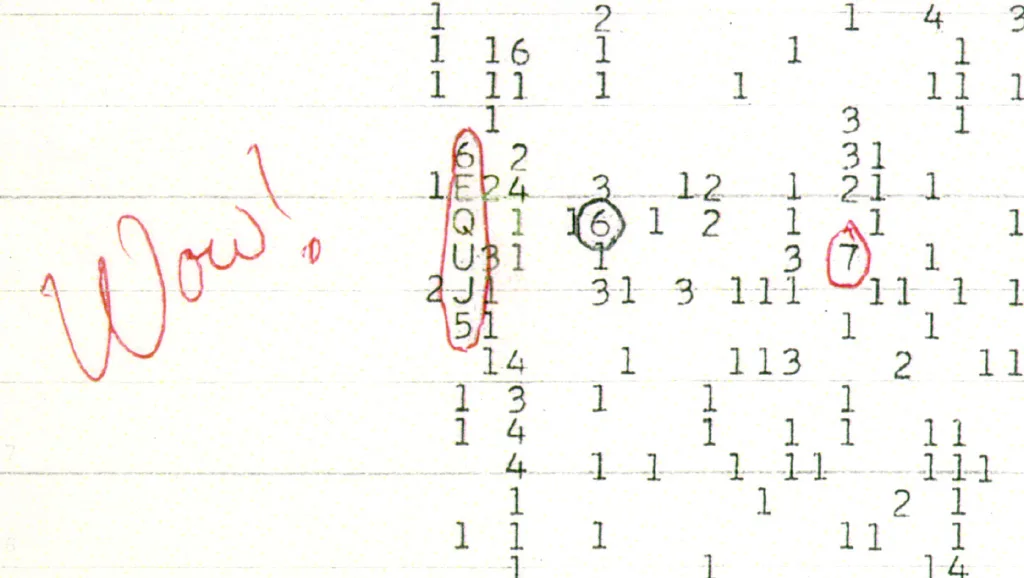 The Wow! SignalContrast · A puzzling signal that was explained, versus one that never repeated.
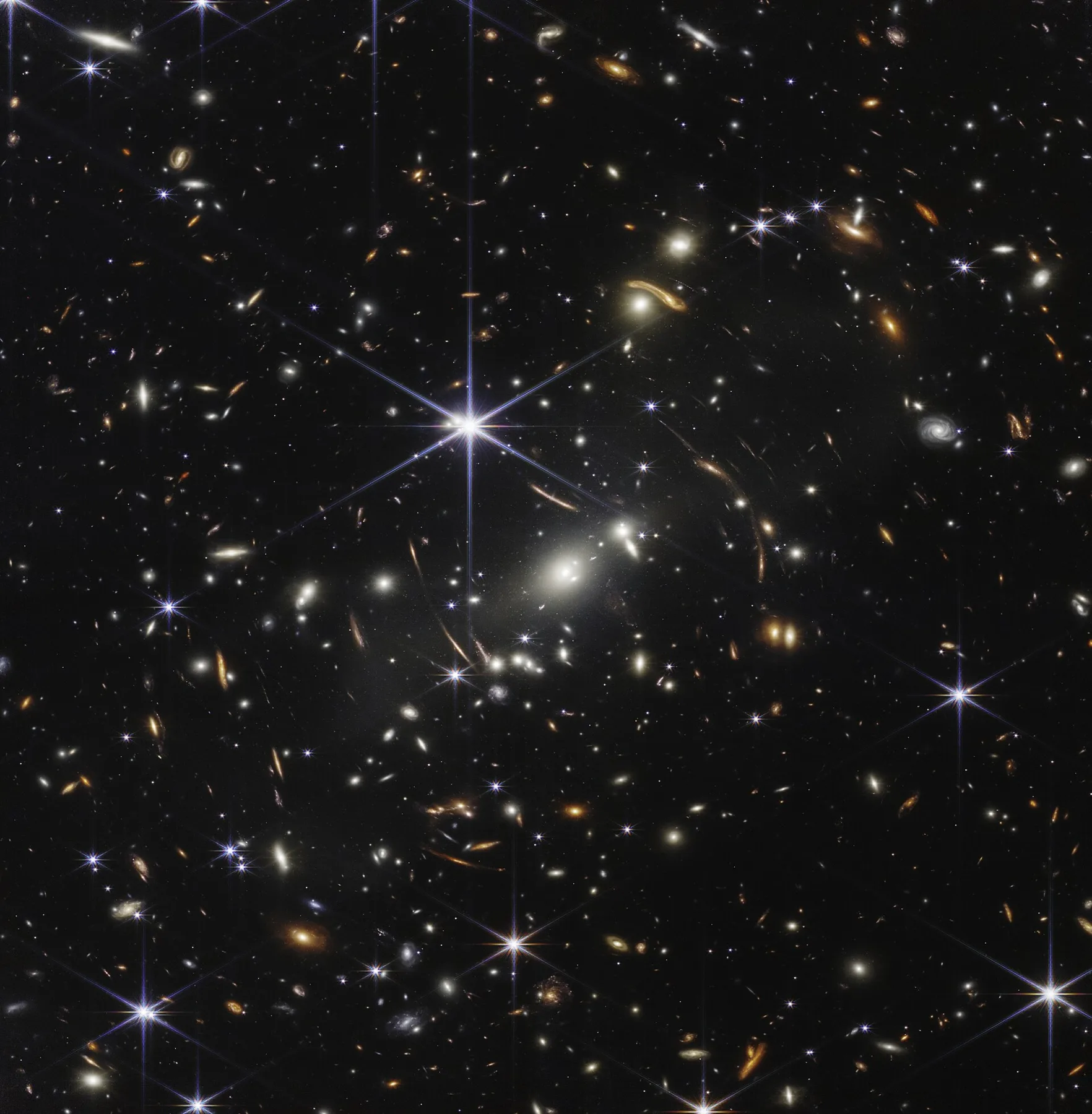 Webb's First Deep FieldSame open question · Both reveal the physics of the distant universe.
See The Discovery of Pulsars in the discovery universe →
Ask the archive
Have a question about this dossier, or think a claim needs a better source? Send it to the editors.
How to read the labels
Hero image: The Crab Nebula and its central pulsar (Chandra X-ray + Hubble optical composite). Photo: NASA/CXC/ASU/J. Hester et al.; NASA/HST/ASU/J. Hester et al. · Public domain · via Wikimedia Commons. Evidence labels describe the written claims, not the image. Version 1 · updated 2026-10-22.